
A workplace step challenge is a simple way to encourage employees to move more during a set period of time. The format is easy to understand: participants collect steps individually or in teams, follow their progress and stay motivated by shared goals.
For many organisations, a step challenge is a natural first step in workplace wellbeing. At the same time, more and more companies are now choosing broader formats where more than steps count – to include more employees, create stronger social engagement and build long-term cohesion.
Quick summary
A workplace step challenge is a time-limited activity where employees collect steps, often using a mobile phone, smartwatch or activity tracker. Step challenges are easy to launch and communicate, but they can also become limiting because they focus on one single activity and often quickly reveal who will end up at the top.
That is why many companies today move on to broader fitness challenges, activity challenges or wellness challenges, where more types of movement count, the thresholds are lower and social engagement plays a bigger role.
What is a workplace step challenge?
A workplace step challenge is an activity where employees track how many steps they take during a specific period. Participation can be individual, team-based or organised as a shared challenge for the entire company.
A common format is that participants collect steps every day and follow their progress individually or as part of a team. There is often a shared goal or a competitive element that creates motivation during the challenge, which usually runs for 2–6 weeks.
Step challenges are often used as a simple way to increase everyday movement, create engagement and help more employees reflect on their daily activity habits.
Why are step challenges popular at work?
Step challenges have become popular because they are easy to understand, simple to communicate and relatively quick to launch. They often require very little introduction, since most people already understand the concept of steps and can track their activity through a mobile phone or watch.
For many companies, a step challenge becomes an easy way to make health and wellbeing more concrete. It can encourage everyday movement, strengthen team spirit and work as a first test of a broader wellbeing initiative.
The World Health Organization recommends that adults do at least 150–300 minutes of moderate-intensity physical activity per week, or an equivalent amount of vigorous-intensity activity. A workplace challenge is one practical way for employers to help more people bring movement into everyday life – together with their colleagues.
Many people use the terms step challenge, fitness challenge and activity challenge in similar ways, even though the formats can differ. The difference is that a step challenge focuses on steps, while a fitness or wellness challenge often includes more types of activities and a stronger social context.
Benefits and limitations of workplace step challenges
A step challenge can work well when the goal is to create a clear, simple and time-limited wellbeing initiative.
Benefits of a workplace step challenge
|
Benefit |
What it means |
|
Easy to understand |
Everyone knows what steps are and how they are tracked |
|
Low barrier to entry |
Often requires little preparation |
|
Clear goal |
Participants can see their progress day by day |
|
Supports everyday movement |
Encourages walking and more movement in daily life |
|
Can create engagement |
Especially at the start of the activity |
For organisations that want to do something simple and visible around health, a step challenge can therefore be a good first step.
Limitations of step challenges
Despite their benefits, step challenges also have clear limitations. This is especially true if the goal is to create broad participation, long-term behaviour change or include employees with different conditions and abilities.
One common challenge is that the step challenge focuses on one single activity. This means that other forms of exercise and movement are not always visible in the result, such as cycling, strength training, swimming, yoga or group training.
Another challenge is that step challenges are often decided very early. After only two or three days, it can already be clear which people or teams will stay at the top. These are often employees who naturally walk a lot in everyday life, such as dog owners, facility staff, warehouse employees or people with very active jobs.
When some participants quickly reach 20,000–30,000 steps per day, others may feel that they will never be able to catch up.
This can cause many people to lose motivation early, even if the original purpose was to help more employees move more.
This does not mean that step challenges are bad. But it does mean that companies should consider what they actually want to achieve: is the goal to measure the most steps, or to help more employees become active and feel included?
Read our article: Why many companies move on from traditional step challenges.
Step challenge or wellness challenge – what is the difference?
A step challenge mainly focuses on the number of steps. A wellness challenge is usually broader and can include several types of physical activity, social motivation, team engagement and sometimes also recovery or mental wellbeing.
An important difference is also how motivation is created. In a traditional step challenge, engagement is often based on ranking and performance. In a modern wellness challenge, engagement is often based more on community, encouragement and the idea that everyone can contribute from their own level.
|
Workplace step challenge |
Workplace wellness challenge |
|
Focuses on steps |
Includes several types of activities |
|
Easy to start |
More flexible and inclusive |
|
Suits everyday walking |
Suits different fitness levels |
|
Often has a clear competition element |
Builds more on community and social motivation |
|
Can be decided early |
More people can contribute throughout the period |
|
Risk that already active employees dominate |
Lower thresholds for less active employees |
|
Can feel individual |
Can strengthen connection between colleagues |
|
Can become limiting over time |
Better for long-term engagement |
Many companies start with a step challenge because it is simple and clear. When the ambition grows, they often move on to a broader fitness challenge or wellness challenge, where more ways of moving count and where social engagement becomes more important.
Why social motivation often works better than ranking
One important difference between a traditional step challenge and a modern wellness challenge is the social context.
In a step challenge, the focus is often on the number of steps and position on a leaderboard. This can motivate some people, but it does not always make more employees feel included. If the same people quickly end up at the top, the challenge can lose momentum for the rest of the organisation.
In a broader fitness or wellness challenge, the social part often becomes a bigger part of the experience. Colleagues can encourage each other, share activities, comment, like and follow how the team develops together. This means that the activity is not only about performance, but also about community.
This is often where the greater effect appears for the organisation:
- more people feel seen
- more people dare to participate
- the activity becomes a shared experience
- colleagues get to know each other across departments
- cohesion is strengthened even in hybrid and remote teams
For many companies, this is at least as important as the number of registered activities.
Lower thresholds when everyone can contribute at their own level
One of the biggest advantages of a broader wellness challenge is that the threshold for participation can become even lower than in a traditional step challenge.
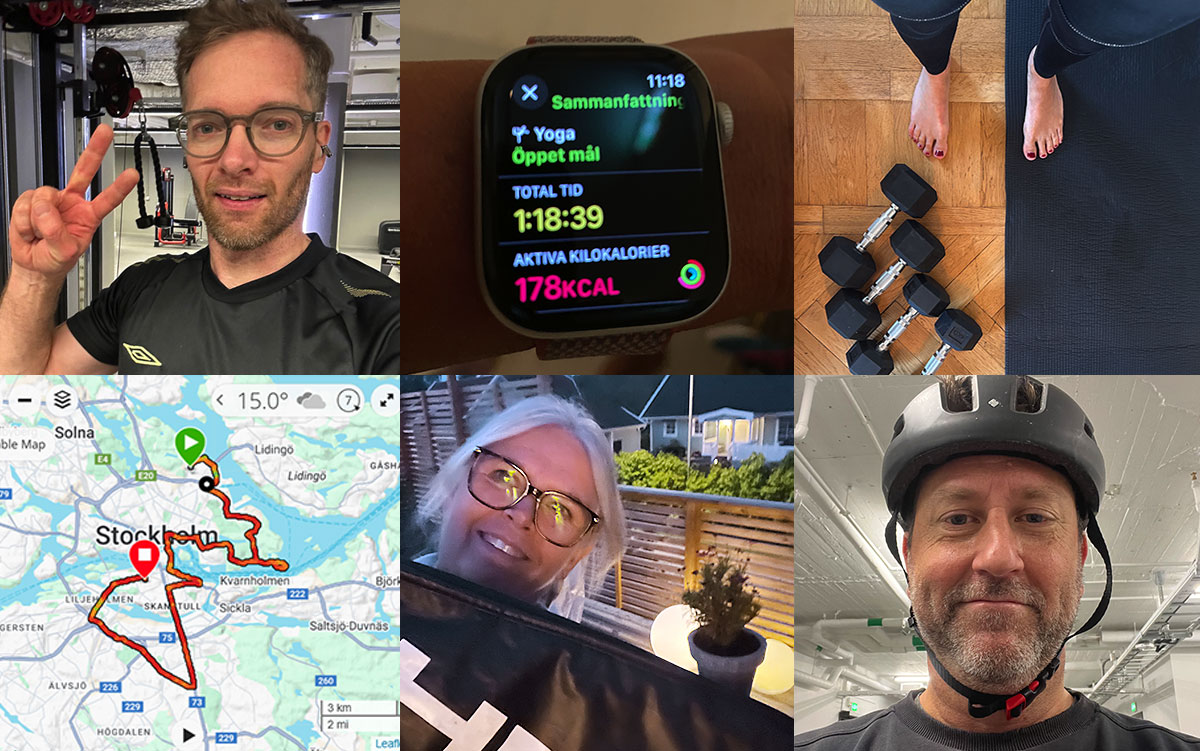
In many modern wellness challenges, activities are counted in a way that means participants do not need to compare performance, speed or fitness level. A workout, a brisk walk, a yoga session or a bike ride can contribute just as much to the team’s result, as long as the activity meets the basic criteria of the challenge.
This works as a kind of built-in levelling system. The point is not that the person who trains the hardest automatically wins, but that everyone who moves regularly can contribute.
In broader wellness challenges, both everyday movement and more advanced training can contribute to the team result. This means that even people who do not exercise regularly can participate on their own terms.
For many organisations, this becomes a way to create greater inclusion and reduce the feeling of individual performance.
This is one important reason why many companies move from a pure step challenge to a broader wellness challenge.

Alternatives to a workplace step challenge
A common alternative to a step challenge is a broader corporate wellness challenge. Here, the focus is not only on steps, but on creating regular activity, community and motivation over time.
In a wellness challenge, the following activities can count, for example:
- walking
- running
- cycling
- strength training
- group training
- swimming
- yoga
- padel, tennis or other sports
- everyday movement
- recovery activities, depending on the format
This makes the format more inclusive, since more employees can participate on their own terms.
Read more about how a corporate wellness challenge can work in practice.
When is a step challenge the right choice – and when is a wellness challenge better?
When is a workplace step challenge a good fit?
A step challenge often works well when the company wants to do something simple, quick and easy to communicate. For example, it can be a way to test a first wellbeing initiative, create more everyday movement or start a short-term engagement around workplace health.
When is a wellness challenge a better fit?
A wellness challenge is also very quick and easy to launch and is often a better fit when the goal is to create greater social interaction among employees, get higher participation and long-term engagement. Since more types of activities can count, it becomes easier to include different fitness levels, hybrid teams and employees with different needs and conditions.
For many organisations, a wellness challenge might be a better option than a traditional step challenge.
What should companies consider before starting a step challenge?
Before you start a step challenge, it is worth thinking about what you want to achieve. Is the goal to create a fun one-off initiative, or do you want to build the foundation for more sustainable wellbeing habits?
Checklist for companies
|
Question |
Why it matters |
|
Should only steps count? |
Affects how inclusive the activity becomes |
|
Should all activities be able to contribute? |
Makes it easier for more people to participate |
|
Should participants compete individually or in teams? |
Affects motivation and community |
|
How do you avoid the challenge being decided too early? |
Important for maintaining engagement |
|
How do you include less active employees? |
Determines whether the activity reaches the whole organisation |
|
How long should the challenge run? |
Affects engagement and behaviour change |
|
Should there be a social feed? |
Can increase motivation and participation |
|
How will results be followed up? |
Important for HR, leadership and continued wellbeing work |
|
Should the activity work globally? |
Important for organisations with several offices or countries |
The clearer you are about the purpose, the easier it becomes to choose the right format.
How do you get more employees to participate?
One of the most important questions for HR and leadership teams is not only how to start a step challenge – but how to get many employees to actually take part.
To increase participation, the format needs to feel simple and inclusive. It usually works best when the activity:
- is easy to understand
- is built around community
- works for different activity levels
Many organisations also find that team-based formats and social encouragement often work better than pure individual ranking.
Examples of companies that have moved beyond step challenges
Many organisations start with a simple step challenge but later choose broader wellbeing initiatives to include more employees and create a greater effect.
One example is when companies move from only counting steps to including more forms of physical activity. This means that employees who cycle, do strength training, swim, join group training or do other everyday movement can participate on more equal terms.
The broader format often makes the activity feel fairer, more social and more relevant to more people.
Read how SKF worked with a wellness challenge to create a better workplace.
See more examples of how companies work with modern wellness challenges.
Digital platforms for step challenges and wellness challenges
Many companies today use digital platforms to run step challenges, fitness challenges and broader wellness challenges. A digital solution makes it easier to gather participants, register activities, follow progress and create social interaction during the challenge.
For larger organisations, it is often also important to be able to follow results across teams, offices or countries.
In more modern wellness challenges, the platform is not only about counting steps. The focus is often just as much on creating participation, motivation and community over time.
This is also why many companies move from traditional step challenges to broader activity challenges where more types of movement and wellbeing habits can be included. Many companies today use digital platforms to make wellness challenges more inclusive and easier to run in larger organisations.
We+ is an example of such a platform.
Frequently asked questions about workplace step challenges
How long should a workplace step challenge last?
A workplace step challenge often runs for 2–6 weeks. Shorter periods can work well to create quick engagement, while slightly longer formats can create better conditions for new habits.
How many steps should be the goal?
It depends on the target group. A goal that is too high can motivate some people but exclude others. For companies, it is often better to set goals based on improvement, team effort or regularity rather than only rewarding the highest number of steps.
Should employees compete individually or in teams?
Team-based formats often work better if the goal is to create community and include more employees. Individual leaderboards can motivate some people, but they can also make less active participants lose interest.
Why do some people lose motivation in step challenges?
One common reason is that the step challenge quickly feels decided. If some participants already have a very large lead after a few days, others may feel that they have no realistic chance of catching up. That is why team-based and more inclusive formats often work better for maintaining engagement.
How do you get more participants?
To get more participants, the format should be simple, inclusive and social. Clear communication, team spirit, shared goals and the possibility to participate at different levels often make more people want to join.
Is a step challenge enough to create change?
A step challenge can be a good start for creating movement and engagement in the workplace. For more long-term behaviour change, a broader format is often needed – one that includes more types of activities and where social motivation plays a bigger role.
What is the difference between a step challenge and a fitness challenge?
A step challenge focuses on the number of steps. A fitness challenge can include more types of physical activity, such as walking, cycling, training, swimming or group activities. This often makes a fitness challenge more inclusive.
What is the difference between a step challenge and a wellness challenge?
A step challenge mainly focuses on steps. A wellness challenge is broader and can include physical activity, social motivation, team engagement and sometimes also recovery or mental wellbeing. This makes it easier for more employees to participate on their own terms.
Why is social motivation important in a wellness challenge?
Social motivation means that the activity is not only about results, but also about community. When colleagues can encourage each other, share activities and follow the team’s progress, the challenge often becomes more engaging and inclusive.
Do you need an app to run a step challenge?
Not always. Some solutions are app-based, while others are web-based or work as progressive web apps. The most important thing is that it is easy for participants to get started and register their activity.
Can all types of activities count in a step challenge?
In a traditional step challenge, usually only steps are counted. Many companies therefore choose broader fitness or wellness challenges where activities such as cycling, swimming, yoga and strength training can also be included, so more people can participate on their own terms.
Do you want to move from a step challenge to a broader wellness challenge?
A step challenge can be a good way to get started with workplace wellbeing. But if the goal is to create stronger engagement, include more employees and build more sustainable habits, a broader wellness challenge may be a better next step.
In a modern wellness challenge, the most important thing is not only who moves the most. What matters is that more people get started, that colleagues encourage each other and that the activity contributes to a stronger sense of community at work.
Read more about how modern wellness challenges work in practice