
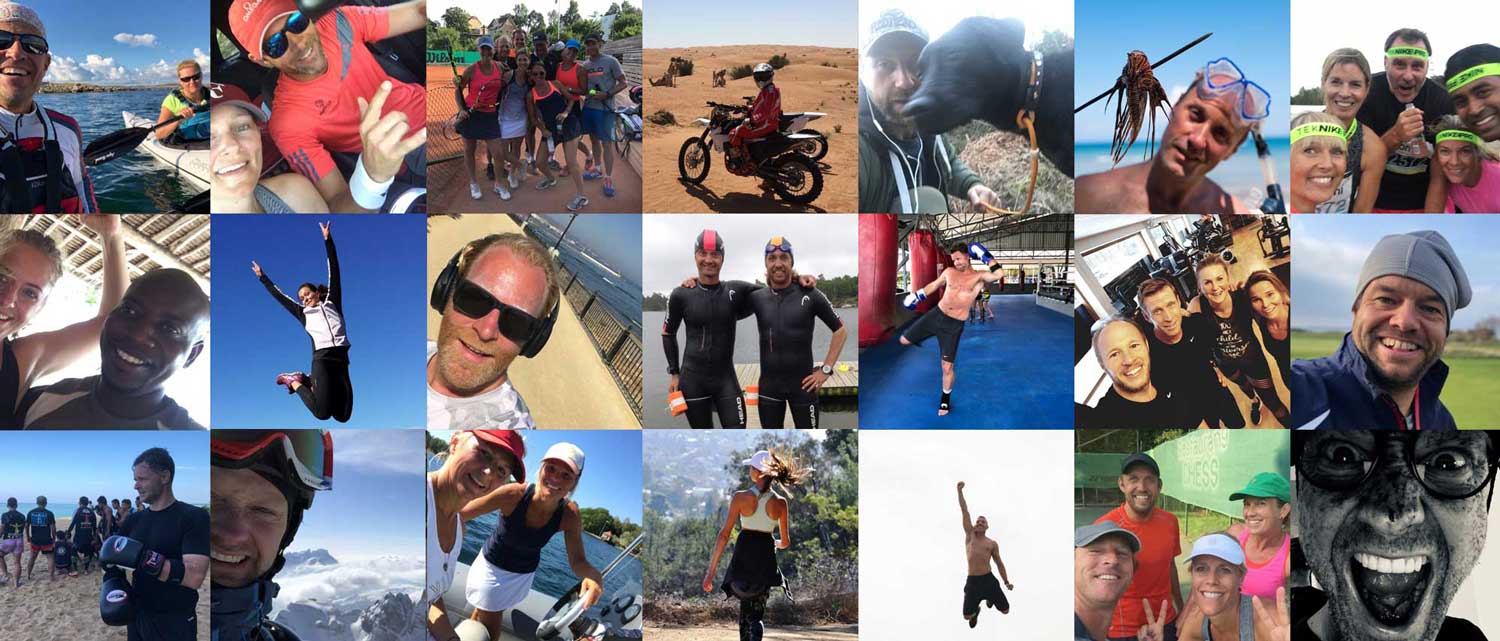
A corporate wellness challenge helps companies increase everyday movement, strengthen employee engagement and build a stronger sense of community across teams, offices and countries. During a limited period of time, employees take part in activities, follow shared goals and encourage one another – often in teams, groups or across the entire organisation.
What makes modern corporate wellness challenges especially effective is that they are not only about exercise. They are also about community, energy and connection.
When colleagues from different offices, departments or countries take part in the same challenge, they share an experience. People who rarely meet each other get to see one another, share photos and activities, comment and encourage their colleagues. This helps build a stronger sense of belonging – even in large, distributed or hybrid organisations.
For many companies, a wellness challenge therefore becomes more than a health initiative. It becomes a way to strengthen company culture, increase employee engagement and show that the employer invests in people’s wellbeing.
Quick summary
A corporate wellness challenge is a time-limited activity where employees are encouraged to move more, build healthy habits and take part in a shared workplace initiative. Unlike a traditional step challenge, a wellness challenge can include several types of activities, social motivation and team-based engagement.
Modern corporate wellness challenges are often used to increase physical activity, strengthen relationships between colleagues, connect offices and countries, and contribute positively to employer branding.
What is a corporate wellness challenge?
A corporate wellness challenge is a structured and time-limited initiative where employees are encouraged to focus on their health through activity, shared goals and social motivation.
It can include:
- walking
- running
- cycling
- everyday movement
- strength training
- group training
- yoga
- recovery
- sleep-related goals
- stress management
- other healthy habits
Unlike simpler initiatives, such as a pure step challenge, a corporate wellness challenge is designed to allow more people to participate based on their own abilities and circumstances. The focus is not only on performance, but on participation, consistency and community.
Many companies that search for workplace wellness challenges first look for a corporate step challenge. But many soon realise that the need is broader: they do not only want to count steps, they want to create an initiative that engages more people and lasts longer.
Why do companies use wellness challenges?
Companies use wellness challenges to create more movement, more energy and stronger connections in the workplace. But the effect is often about more than physical activity.
A corporate wellness challenge can help:
- more employees take part in wellbeing initiatives
- health become a natural part of everyday work
- colleagues get to know each other better
- team spirit become stronger
- remote and hybrid teams share a common activity
- employees in different countries feel more connected
- the employer strengthen its employer brand
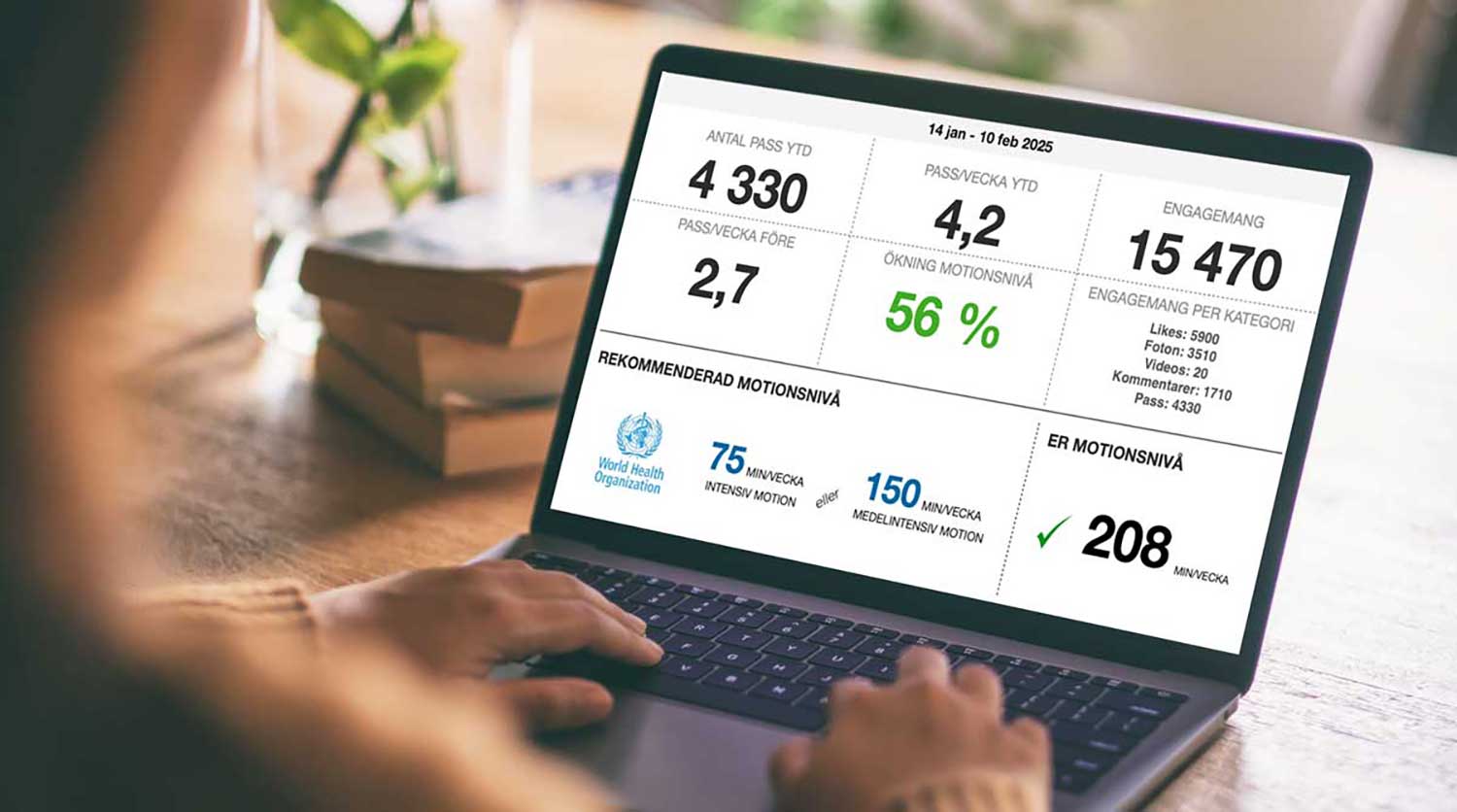
The World Health Organization recommends that adults do at least 150–300 minutes of moderate-intensity physical activity per week, or an equivalent amount of vigorous-intensity activity. A workplace wellness challenge is one practical way for employers to help more people bring movement into everyday life – together with their colleagues.
For HR, leadership teams and managers, a wellness challenge is a concrete way to show that wellbeing is a priority – not just something mentioned in policy documents.
The together effect – why wellness challenges work so well
One of the greatest strengths of a corporate wellness challenge is the together effect.
When employees participate in the same activity during the same period, a shared story is created within the organisation. Something happens that many people can talk about, follow and contribute to – regardless of role, department or location.
This is especially valuable in organisations where employees are spread across:
- different offices
- different cities
- different countries
- factories and head offices
- field organisations
- hybrid or remote teams
In many companies, employees mainly know the people they work with most closely. A wellness challenge can break that pattern. When participants share photos from walks, workouts, nature experiences, bike rides or everyday movement, colleagues get to see each other in a more personal way.
This can create relationships that otherwise would not have happened.
An employee in Sweden can see how a colleague in Germany exercises after work. A team in Denmark can follow activities from colleagues in Poland. Someone at the head office can, for the first time, get a more vivid impression of colleagues in production, retail or the field.
This strengthens the feeling of being part of the same organisation.
Employer branding and company culture
Corporate wellness challenges can also be powerful from an employer branding perspective.
When a company creates activities that engage many employees, it signals that the employer cares about more than performance and results. It shows that health, community and work-life energy are part of the culture.
This can be valuable both internally and externally.
Internally, a wellness challenge can contribute to:
| EFFECT | HOW IT SHOWS |
| Stronger sense of belonging | Employees take part in something shared |
| Better relationships | Colleagues get to know each other beyond their work roles |
| More energy | The challenge creates conversation, encouragement and movement |
| More visible culture | Company values become concrete in everyday life |
| Increased pride | Employees feel that the employer invests in wellbeing |
Externally, it can strengthen the image of the company as:
- a caring employer
- a modern organisation
- a social and inclusive workplace
- a company that prioritises sustainability and wellbeing
- an employer that creates engagement across borders
For candidates, customers and partners, this type of initiative can help shape the image of a company where people thrive and do things together.
How does a modern corporate wellness challenge work?
A corporate wellness challenge is often run over a period of four to eight weeks. The format is usually easy to understand and designed to include as many employees as possible.
A modern wellness challenge often includes:
- clear start and end dates
- simple activity registration
- teams or groups
- a social feed
- photos, comments and encouragement
- shared goals
- ongoing statistics
- follow-up after the challenge has ended
The first few days are often about lowering the threshold and helping participants get started. Over time, engagement grows as colleagues begin to share activities, comment on each other’s posts and follow how the teams are progressing.
The social feed is often central. It means that the wellness challenge becomes more than a way to register exercise – it becomes a shared experience.
What does a wellness challenge deliver in practice?
What sets a wellness challenge apart from many other wellbeing initiatives is that it becomes part of everyday work. It shows up in conversations, teams, internal channels and the social feed.
When it works at its best, it is not only about getting more people moving. It is about helping more people feel involved.
| EFFECT | HOW IT CAN SHOW IN THE ORGANISATION |
| Higher participation | More people get started because more activities count |
| Stronger community | Colleagues encourage, comment and follow each other |
| More everyday movement | Activity becomes recurring and visible |
| Better relationships | Employees share photos and experiences from daily life |
| Stronger sense of belonging | Colleagues in different offices and countries participate together |
| A more active culture | Health becomes something the organisation does together |
| Better follow-up | HR and management receive aggregated results after the challenge |
For many companies, the combination of activity and social interaction is what makes the wellness challenge valuable.
ROI and business value of a corporate wellness challenge
A corporate wellness challenge creates value on several levels. Some effects can be estimated financially, while others are related to culture, engagement, relationships and employer branding. For HR and leadership teams, ROI can therefore be an important way to show that the wellness challenge is not only an appreciated activity, but also an initiative that can create measurable value.
In We+ follow-ups, ROI is usually calculated based on three main effect areas: reduced sick leave, movement from risk group to healthy group, and increased productivity. In addition to these, there are important effects that are not always given an exact monetary value in the calculation, such as mental wellbeing, engagement, cohesion and employer branding.
In previous customer calculations, ROI has often been in the range of approximately 1:16 to 1:32. This means that, in these calculations, every invested unit of currency in the wellness challenge corresponded to around 16 to 32 units of estimated value in return. ROI should always be seen as an estimate, not a guarantee, and should therefore be presented with clear and cautious assumptions.
The three areas that can often be calculated
| EFFECT AREA | WHAT IS CALCULATED | EXAMPLE INPUT |
| Reduced sick leave | Fewer sick days and lower cost of short-term absence | Active participants × reduced sick days × cost per sick day |
| From inactivity to healthier habits | The value of employees moving from very low activity levels to more regular movement | Number moving from inactive to active × retention × health-economic value |
| Productivity increase | Increased energy, stamina and work ability linked to improved activity levels | Active participants × annual salary × assumed productivity increase |
1. Reduced sick leave
Regular physical activity can contribute to better health and fewer sick days over time. ROI calculations often use a cautious assumption about reduced short-term absence per active participant. This can include the number of active participants, estimated reduction in sick days, average cost per sick day, sick pay and productivity loss.
2. From risk group to healthy group
Another important effect occurs when employees move from very low activity levels to more regular movement. In many wellness challenges, there is a clear reduction in the share of inactive participants during the period. The economic value is calculated cautiously by looking at how many people move from inactive to active, how many are assumed to maintain the behaviour change and an estimated health-economic value per person per year.
3. Productivity increase
Physical activity does not only affect health. It can also affect energy, stamina and work ability. That is why part of the ROI calculation can be based on a cautious estimate of increased productivity. Calculations can, for example, be based on the number of active participants, average annual salary and an assumed productivity increase linked to improved activity levels.
Effects that are not always visible in the ROI calculation
Not all important effects of a corporate wellness challenge are easy to translate into an exact financial value. Many of the most valuable effects are about people, culture and relationships. ROI should therefore be complemented with other key figures and qualitative effects.
| EFFECT | WHY IT MATTERS |
| Mental wellbeing | Physical activity can contribute to reduced stress, anxiety and improved mental wellbeing |
| Engagement and cohesion | Likes, comments, photos, videos and encouragement build relationships and strengthen the sense of togetherness |
| Employer branding | A visible wellness challenge shows that the employer prioritises health, community and the employee experience |
| Belonging across offices and countries | Employees see and get to know colleagues they rarely meet in everyday work |
Example of ROI from a wellness report
In an example report from We+, the annual effect was calculated at SEK 1.94 million and the ROI at 1:18. The calculation was based on three effect areas: reduced sick leave, movement from risk to healthy, and productivity increase. The same report also highlighted mental wellbeing, engagement and cohesion, and employer branding as important effects that were not included as direct savings in the calculation.
This type of calculation makes it easier for HR and leadership teams to connect a wellness challenge to both human and business outcomes. At the same time, it is important to be transparent: the result varies between organisations depending on participation rate, activity level, cost, salary levels and the assumptions used.
Want to see how a wellness challenge could work in your organisation?
We+ helps companies create inclusive and social wellness challenges where more activities count and colleagues encourage each other across teams, offices and countries.
Book a demo with We+
Wellness challenge or step challenge – what is the difference?
Many companies start with a step challenge because it is easy to understand and quick to launch. But a step challenge mainly focuses on the number of steps, while a wellness challenge is usually broader.
A wellness challenge can include more activities, more ways to participate and more social interaction.
| STEP CHALLENGE | WELLNESS CHALLENGE |
| Focuses on number of steps | Includes several types of activities |
| Often ranking-based | Builds more on community and social motivation |
| Can be decided early | More people can contribute throughout the period |
| Mainly suits walking | Suits different levels and forms of exercise |
| Risk that already active employees dominate | Lower threshold for less active employees |
| Often based on individual performance | Greater focus on teams, groups and belonging |
| Limited social effect | Can strengthen relationships and company culture |
A step challenge can be a good start. But if the goal is to include more employees and create longer-lasting engagement, a broader corporate wellness challenge is often a better option.
Read more about how a workplace step challenge works in practice.
Read also: Why many companies move on from traditional step challenges
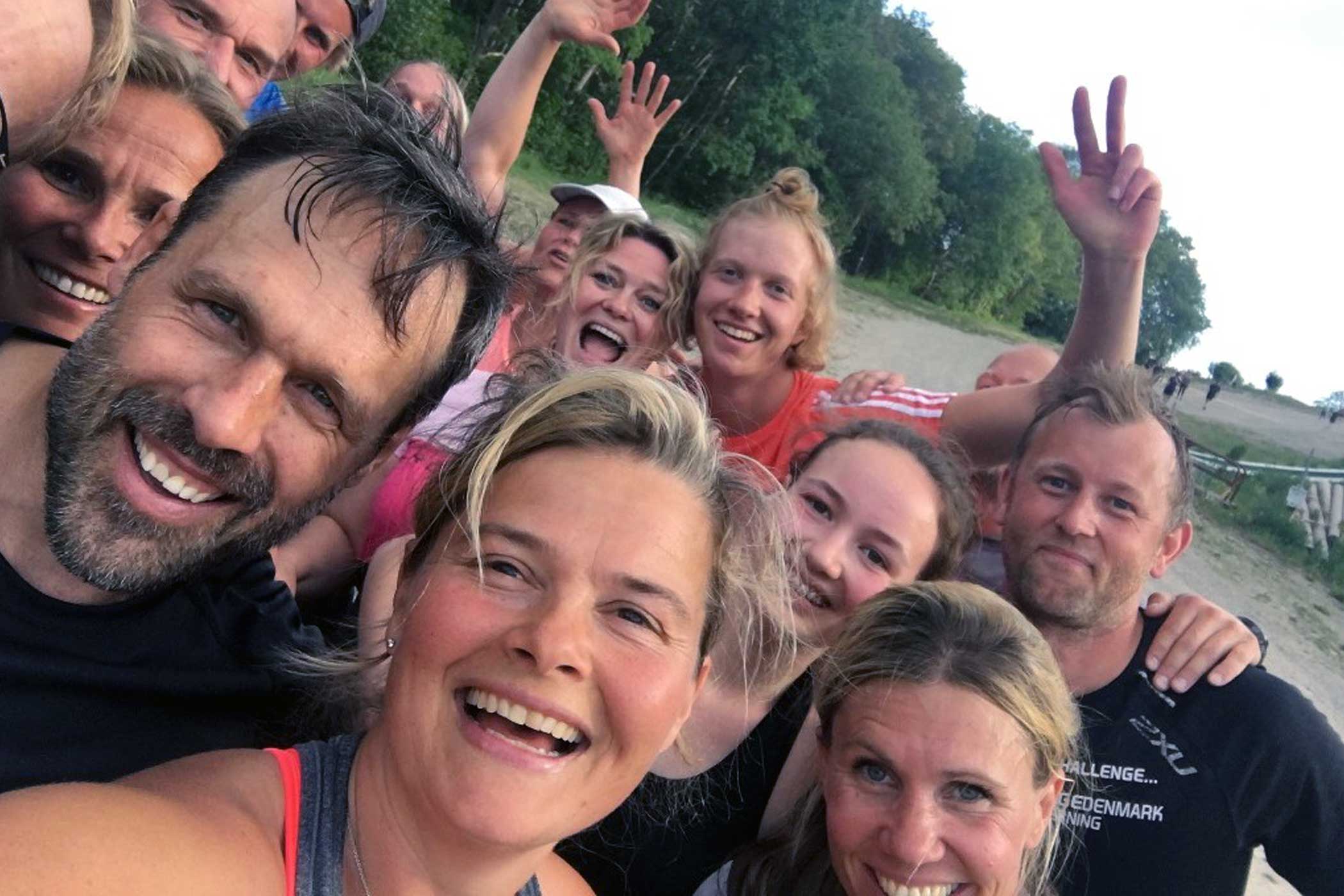
Why social motivation often works better than individual ranking
In many traditional step challenges, the focus quickly shifts to ranking and performance. For some people this can be motivating, but for others it can create a feeling that they are not participating on equal terms.
Modern corporate wellness challenges often work better because they are built more on social motivation than individual competition.
When participants can share photos, experiences and progress, the activity becomes more human. Colleagues get to see sides of each other that are rarely visible in meetings, emails or project groups.
This could include photos from:
- a morning walk
- a bike ride after work
- a workout with family
- a hike in nature
- a lunch walk with colleagues
- an activity from another country or office
This creates conversations and relationships. Even colleagues who work in the same office can get to know each other better, since many people mostly talk to the people they work with most closely.
When health becomes something people share, not just something they measure, engagement often becomes stronger.
Lower thresholds when more activities count
Another important difference is that modern wellness challenges can have lower thresholds than traditional step challenges.
In a step challenge, people who already walk a lot in everyday life often have an advantage. In a broader wellness challenge, more activities can count, making it easier for more employees to participate on their own terms.
This can include:
- a brisk walk
- a running session
- cycling to work
- a yoga session
- swimming
- strength training
- group training
- everyday movement
In some formats, all approved activity sessions can contribute equally, regardless of whether the participant is a beginner or an experienced exerciser. This works as a built-in levelling system where consistency, participation and team engagement become more important than individual performance.
The focus shifts from:
“Who is the fittest?”
to:
“How do we include more people – and how do we do this together?”
What should companies consider before starting a wellness challenge?
Many companies underestimate how much the format matters. A wellness challenge works best when it is simple, inclusive and social.
Checklist for companies
| QUESTION | WHY IT MATTERS |
| What is our goal with the challenge? | Affects format, communication and follow-up |
| Should several activities count? | Makes it easier for more people to participate |
| Should participants be divided into teams or groups? | Strengthens community and motivation |
| How do we include less active employees? | Determines whether the initiative reaches the whole organisation |
| How visible should the social part be? | Affects belonging and engagement |
| Should the format work across several countries? | Important for global and distributed organisations |
| How will we follow up results? | Important for HR, leadership and continued wellbeing work |
| How does the initiative connect to our culture? | Makes the activity relevant for employer branding |
The broader and more inclusive the format is, the greater the chance that more employees will feel involved.
Examples of companies that have worked with wellness challenges
Many companies today use wellness challenges as a way to strengthen both health and company culture.
For example, companies can see how participation increases when more types of activities are included, and how more employees feel involved when the focus is not only on performance.
Corporate wellness challenges can be especially valuable in organisations with several offices or countries, because they create a shared activity that connects employees across geographical boundaries.
Read how Moelven strengthened both body and team spirit.
Read how Alfa Laval worked with health and corporate culture.
Digital platforms for corporate wellness challenges
Many companies use digital platforms to make wellness challenges easier to run, follow up and scale across the organisation.
A digital platform can help the company:
- invite employees
- create teams and groups
- register different types of activities
- collect statistics
- enable social interaction
- share photos and experiences
- follow progress over time
- summarise results after the challenge has ended
In modern wellness challenges, the platform is not only about registering activity. It also works as a social space where employees can encourage each other, share experiences and feel part of something shared.
We+ is an example of a digital platform for corporate wellness challenges where companies can bring employees together in teams, register different types of activities and create social motivation through photos, comments, encouragement and shared goals.
With a solution like We+, the wellness challenge can be used to create activity and cohesion across offices, departments and countries – with a focus on helping more people participate, rather than simply measuring who performs the most.
Frequently asked questions about corporate wellness challenges
What is a corporate wellness challenge?
A corporate wellness challenge is a time-limited activity where employees are encouraged to work on health, movement and wellbeing through shared goals, activities and social motivation.
How long should a corporate wellness challenge be?
A corporate wellness challenge often runs for four to eight weeks. This is long enough to create engagement and new habits, but short enough for participants to maintain motivation.
Are wellness challenges suitable for all companies?
Yes. Wellness challenges can be adapted for both small and large organisations. They work especially well when the format is inclusive and makes it possible for employees to participate at different levels and from different locations.
Do wellness challenges work for companies with several offices or countries?
Yes. Wellness challenges are often very suitable for companies with several offices, countries or hybrid teams. Since everyone participates in the same activity, the challenge can create a shared experience and strengthen the sense of connection across geographical boundaries.
Is a wellness challenge the same as employee wellbeing?
No. A wellness challenge is often a structured and time-limited initiative within a company’s broader employee wellbeing work. Employee wellbeing can include many different areas, while a wellness challenge is a concrete format that creates activity, engagement and follow-up during a specific period.
Is a step challenge just as effective?
A step challenge can be a good start, but many companies find that the effect becomes limited over time because the focus is placed on one single activity. Wellness challenges are often more inclusive because more activities can count and the social element becomes more important.
What is the difference between a fitness challenge and a wellness challenge?
A fitness challenge mainly focuses on physical activity. A wellness challenge can be broader and may also include recovery, social motivation, habits and other parts of wellbeing. In practice, the terms are sometimes used in overlapping ways.
Why is social motivation important?
Social motivation means that the wellness challenge is not only about individual results. When colleagues can share activities, photos and experiences, it creates community, encouragement and relationships that often strengthen engagement throughout the challenge.
How can a wellness challenge strengthen employer branding?
A wellness challenge shows that the employer prioritises health, community and the employee experience. This can strengthen the image of the company as a caring, modern and inclusive workplace – both internally and externally.
What is needed to succeed with a corporate wellness challenge?
Success usually requires a simple and clear format, a low threshold for participation, social motivation and the opportunity for different types of employees to contribute. Teams, shared goals and clear communication increase the chance that more people will participate.
How can you calculate ROI on a wellness challenge?
ROI on a wellness challenge can be calculated by estimating the value of reduced sick leave, long-term health improvements when employees move from risk group to healthy group, and potential productivity increases. The calculation should be made cautiously and complemented by effects that are not always monetised, such as cohesion, mental wellbeing and employer branding.
Which effects are difficult to give an exact financial value?
Mental wellbeing, engagement, cohesion, belonging and employer branding are examples of effects that are often highly valuable but difficult to translate directly into money. They should therefore be described as complementary values alongside the ROI calculation.
Want to create a wellness challenge that lasts beyond the campaign?
For many companies, modern wellness challenges are not only about activity. They are about creating engagement, community and more sustainable habits in the workplace. When colleagues move, share experiences and encourage one another, something bigger than the challenge itself is created: a stronger feeling of togetherness.
Read more about how modern wellness challenges work in practice
See how We+ helps companies create inclusive and social corporate wellness challenges
Would you like to discuss what format would suit your organisation?
Book a demo with We+